Its always a tedious task to set path in java every time we restart our pc. Here is how to do that once so that u don't need to do this boring process again.
Steps :
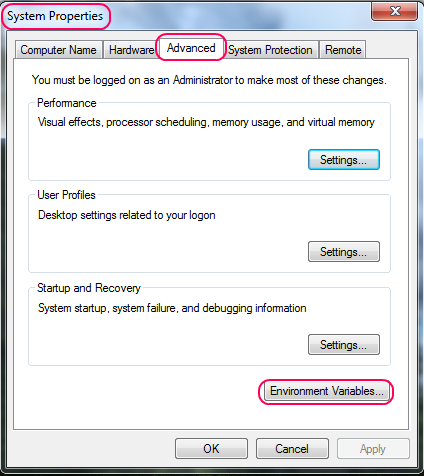
1) Go to System Properties (Shortcut : Press Windows Key + Pause Break).
2) Now Go to "Advanced" Tab.
3) Click on Environment Variables... (See Image Below,Click to Enlarge ) .
4) Under "System Variables" scroll to "Path" and click "Edit".
5) Now what is present in that leave it as it is ( Don't delete any thing but just add after that) and add the following which is in quotes(without quotes) {As shown in image} :
";C:\Program Files\Java\jdk1.6.0\bin"
6)Note:Replace the above line with your path of jdk but add a semicolon first as i have done above
7)Click Ok,Again Ok,Again OK.
You are done.....
Showing posts with label Knowledge. Show all posts
Sunday, June 13, 2010
Sunday, May 16, 2010
Registry Trick : Adding 'Control Panel' Option to 'My Computer'
It is always handy to have an assortment of shortcuts as 'Control Panel' in My Computer.Here is how to do so :-
*Press WinKey + R (Opens Run Dialog)
*Type "regedit" (without quotes)
*The Registry Editor Opens Up.
*Goto "HKEY_LOCAL_MACHINE\SOFTWARE\Microsoft\Windows\CurrentVersion\Explorer\MyComputer\NameSpace" .
*In right hand empty space : Right Click and choose New - Key.
*Type Name as : "{21EC2020-3AEA-1069-A2DD-08002B30309D}" (without quotes)
*Close Regedit.
*You get Control Panel in my computer.
Have Funnnn.............
Or
Download reg file to do this.
It is always handy to have an assortment of shortcuts as 'Control Panel' in My Computer.Here is how to do so :-
*Press WinKey + R (Opens Run Dialog)
*Type "regedit" (without quotes)
*The Registry Editor Opens Up.
*Goto "HKEY_LOCAL_MACHINE\SOFTWARE\Microsoft\Windows\CurrentVersion\Explorer\MyComputer\NameSpace" .
*In right hand empty space : Right Click and choose New - Key.
*Type Name as : "{21EC2020-3AEA-1069-A2DD-08002B30309D}" (without quotes)
*Close Regedit.
*You get Control Panel in my computer.
Have Funnnn.............
Or
Download reg file to do this.
Saturday, May 8, 2010
Command Prompt : All Command Prompt Commands
Command Prompt is best tool in windows.
Here are some of its commands .
ASSOC Displays or modifies file extension associations.
ATTRIB Displays or changes file attributes.
BREAK Sets or clears extended CTRL+C checking.
BCDEDIT Sets properties in boot database to control boot loading.
CACLS Displays or modifies access control lists (ACLs) of files.
CALL Calls one batch program from another.
CD Displays the name of or changes the current directory.
CHCP Displays or sets the active code page number.
CHDIR Displays the name of or changes the current directory.
CHKDSK Checks a disk and displays a status report.
CHKNTFS Displays or modifies the checking of disk at boot time.
CLS Clears the screen.
CMD Starts a new instance of the Windows command interpreter.
COLOR Sets the default console foreground and background colors.
COMP Compares the contents of two files or sets of files.
COMPACT Displays or alters the compression of files on NTFS partitions.
CONVERT Converts FAT volumes to NTFS. You cannot convert the
current drive.
COPY Copies one or more files to another location.
DATE Displays or sets the date.
DEL Deletes one or more files.
DIR Displays a list of files and subdirectories in a directory.
DISKCOMP Compares the contents of two floppy disks.
DISKCOPY Copies the contents of one floppy disk to another.
DISKPART Displays or configures Disk Partition properties.
DOSKEY Edits command lines, recalls Windows commands, and
creates macros.
DRIVERQUERY Displays current device driver status and properties.
ECHO Displays messages, or turns command echoing on or off.
ENDLOCAL Ends localization of environment changes in a batch file.
ERASE Deletes one or more files.
EXIT Quits the CMD.EXE program (command interpreter).
FC Compares two files or sets of files, and displays the
differences between them.
FIND Searches for a text string in a file or files.
FINDSTR Searches for strings in files.
FOR Runs a specified command for each file in a set of files.
FORMAT Formats a disk for use with Windows.
FSUTIL Displays or configures the file system properties.
FTYPE Displays or modifies file types used in file extension
associations.
GOTO Directs the Windows command interpreter to a labeled line in
a batch program.
GPRESULT Displays Group Policy information for machine or user.
GRAFTABL Enables Windows to display an extended character set in
graphics mode.
HELP Provides Help information for Windows commands.
ICACLS Display, modify, backup, or restore ACLs for files and
directories.
IF Performs conditional processing in batch programs.
LABEL Creates, changes, or deletes the volume label of a disk.
MD Creates a directory.
MKDIR Creates a directory.
MKLINK Creates Symbolic Links and Hard Links
MODE Configures a system device.
MORE Displays output one screen at a time.
MOVE Moves one or more files from one directory to another
directory.
OPENFILES Displays files opened by remote users for a file share.
PATH Displays or sets a search path for executable files.
PAUSE Suspends processing of a batch file and displays a message.
POPD Restores the previous value of the current directory saved by
PUSHD.
PRINT Prints a text file.
PROMPT Changes the Windows command prompt.
PUSHD Saves the current directory then changes it.
RD Removes a directory.
RECOVER Recovers readable information from a bad or defective disk.
REM Records comments (remarks) in batch files or CONFIG.SYS.
REN Renames a file or files.
RENAME Renames a file or files.
REPLACE Replaces files.
RMDIR Removes a directory.
ROBOCOPY Advanced utility to copy files and directory trees
SET Displays, sets, or removes Windows environment variables.
SETLOCAL Begins localization of environment changes in a batch file.
SC Displays or configures services (background processes).
SCHTASKS Schedules commands and programs to run on a computer.
SHIFT Shifts the position of replaceable parameters in batch files.
SHUTDOWN Allows proper local or remote shutdown of machine.
SORT Sorts input.
START Starts a separate window to run a specified program or command.
SUBST Associates a path with a drive letter.
SYSTEMINFO Displays machine specific properties and configuration.
TASKLIST Displays all currently running tasks including services.
TASKKILL Kill or stop a running process or application.
TIME Displays or sets the system time.
TITLE Sets the window title for a CMD.EXE session.
TREE Graphically displays the directory structure of a drive or
path.
TYPE Displays the contents of a text file.
VER Displays the Windows version.
VERIFY Tells Windows whether to verify that your files are written
correctly to a disk.
VOL Displays a disk volume label and serial number.
XCOPY Copies files and directory trees.
WMIC Displays WMI information inside interactive command shell.
Here are some of its commands .
ASSOC Displays or modifies file extension associations.
ATTRIB Displays or changes file attributes.
BREAK Sets or clears extended CTRL+C checking.
BCDEDIT Sets properties in boot database to control boot loading.
CACLS Displays or modifies access control lists (ACLs) of files.
CALL Calls one batch program from another.
CD Displays the name of or changes the current directory.
CHCP Displays or sets the active code page number.
CHDIR Displays the name of or changes the current directory.
CHKDSK Checks a disk and displays a status report.
CHKNTFS Displays or modifies the checking of disk at boot time.
CLS Clears the screen.
CMD Starts a new instance of the Windows command interpreter.
COLOR Sets the default console foreground and background colors.
COMP Compares the contents of two files or sets of files.
COMPACT Displays or alters the compression of files on NTFS partitions.
CONVERT Converts FAT volumes to NTFS. You cannot convert the
current drive.
COPY Copies one or more files to another location.
DATE Displays or sets the date.
DEL Deletes one or more files.
DIR Displays a list of files and subdirectories in a directory.
DISKCOMP Compares the contents of two floppy disks.
DISKCOPY Copies the contents of one floppy disk to another.
DISKPART Displays or configures Disk Partition properties.
DOSKEY Edits command lines, recalls Windows commands, and
creates macros.
DRIVERQUERY Displays current device driver status and properties.
ECHO Displays messages, or turns command echoing on or off.
ENDLOCAL Ends localization of environment changes in a batch file.
ERASE Deletes one or more files.
EXIT Quits the CMD.EXE program (command interpreter).
FC Compares two files or sets of files, and displays the
differences between them.
FIND Searches for a text string in a file or files.
FINDSTR Searches for strings in files.
FOR Runs a specified command for each file in a set of files.
FORMAT Formats a disk for use with Windows.
FSUTIL Displays or configures the file system properties.
FTYPE Displays or modifies file types used in file extension
associations.
GOTO Directs the Windows command interpreter to a labeled line in
a batch program.
GPRESULT Displays Group Policy information for machine or user.
GRAFTABL Enables Windows to display an extended character set in
graphics mode.
HELP Provides Help information for Windows commands.
ICACLS Display, modify, backup, or restore ACLs for files and
directories.
IF Performs conditional processing in batch programs.
LABEL Creates, changes, or deletes the volume label of a disk.
MD Creates a directory.
MKDIR Creates a directory.
MKLINK Creates Symbolic Links and Hard Links
MODE Configures a system device.
MORE Displays output one screen at a time.
MOVE Moves one or more files from one directory to another
directory.
OPENFILES Displays files opened by remote users for a file share.
PATH Displays or sets a search path for executable files.
PAUSE Suspends processing of a batch file and displays a message.
POPD Restores the previous value of the current directory saved by
PUSHD.
PRINT Prints a text file.
PROMPT Changes the Windows command prompt.
PUSHD Saves the current directory then changes it.
RD Removes a directory.
RECOVER Recovers readable information from a bad or defective disk.
REM Records comments (remarks) in batch files or CONFIG.SYS.
REN Renames a file or files.
RENAME Renames a file or files.
REPLACE Replaces files.
RMDIR Removes a directory.
ROBOCOPY Advanced utility to copy files and directory trees
SET Displays, sets, or removes Windows environment variables.
SETLOCAL Begins localization of environment changes in a batch file.
SC Displays or configures services (background processes).
SCHTASKS Schedules commands and programs to run on a computer.
SHIFT Shifts the position of replaceable parameters in batch files.
SHUTDOWN Allows proper local or remote shutdown of machine.
SORT Sorts input.
START Starts a separate window to run a specified program or command.
SUBST Associates a path with a drive letter.
SYSTEMINFO Displays machine specific properties and configuration.
TASKLIST Displays all currently running tasks including services.
TASKKILL Kill or stop a running process or application.
TIME Displays or sets the system time.
TITLE Sets the window title for a CMD.EXE session.
TREE Graphically displays the directory structure of a drive or
path.
TYPE Displays the contents of a text file.
VER Displays the Windows version.
VERIFY Tells Windows whether to verify that your files are written
correctly to a disk.
VOL Displays a disk volume label and serial number.
XCOPY Copies files and directory trees.
WMIC Displays WMI information inside interactive command shell.
Thursday, April 8, 2010
Some Tech Abbrevations
ABI Application binary interface
ADT Abstract data type
BAL Bearer Abstraction Layer
BIO Bearer-independent object
CDMA Code Division Multiple Access
DFRD Device family reference design
DRM Digital rights management
DSP Digital Signal Processor
EDGE Enhanced Data Service for GSM Evolution
ETSI European Telecommunications Standards
Institute
FOMA Freedom of Mobile Access
GPRS General Packet Radio Service
IPC Interprocess communication
MOAP Mobile Application Platform
MTM Message type module
MVC Model–view–controller
OBEX IrDA Object Exchange
OMA Open Mobile Alliance
OTA Over the air
PAN Personal Area Networking
PIM Personal information manager
PLP Psion Link Protocol
QoS Quality of Service
RTOS Real-time operating system
RTP Real-time transport protocol
SIP Session initiation protocol
SMIL Synchronized Multimedia Integration
Language
UART Universal Asynchronous
Transmitter/Receiver
UMTS Universal Mobile Telecommunications
System
VoIP Voice over IP
VPN Virtual Private Network
WAP Wireless Application Protocol
WDP Wireless Datagram Protocol
XIP Execute in place
ADT Abstract data type
BAL Bearer Abstraction Layer
BIO Bearer-independent object
CDMA Code Division Multiple Access
DFRD Device family reference design
DRM Digital rights management
DSP Digital Signal Processor
EDGE Enhanced Data Service for GSM Evolution
ETSI European Telecommunications Standards
Institute
FOMA Freedom of Mobile Access
GPRS General Packet Radio Service
IPC Interprocess communication
MOAP Mobile Application Platform
MTM Message type module
MVC Model–view–controller
OBEX IrDA Object Exchange
OMA Open Mobile Alliance
OTA Over the air
PAN Personal Area Networking
PIM Personal information manager
PLP Psion Link Protocol
QoS Quality of Service
RTOS Real-time operating system
RTP Real-time transport protocol
SIP Session initiation protocol
SMIL Synchronized Multimedia Integration
Language
UART Universal Asynchronous
Transmitter/Receiver
UMTS Universal Mobile Telecommunications
System
VoIP Voice over IP
VPN Virtual Private Network
WAP Wireless Application Protocol
WDP Wireless Datagram Protocol
XIP Execute in place
Subscribe to:
Posts (Atom)


